
Explosion-Proof Lighting Wiring Methods: Cable vs Steel Conduit Installation

Introduction
Explosion-proof lighting systems are widely used in hazardous industrial environments such as oil & gas facilities, chemical plants, grain processing plants, and offshore platforms.
Proper wiring methods are essential to ensure safety and reliable operation in these explosive atmospheres.
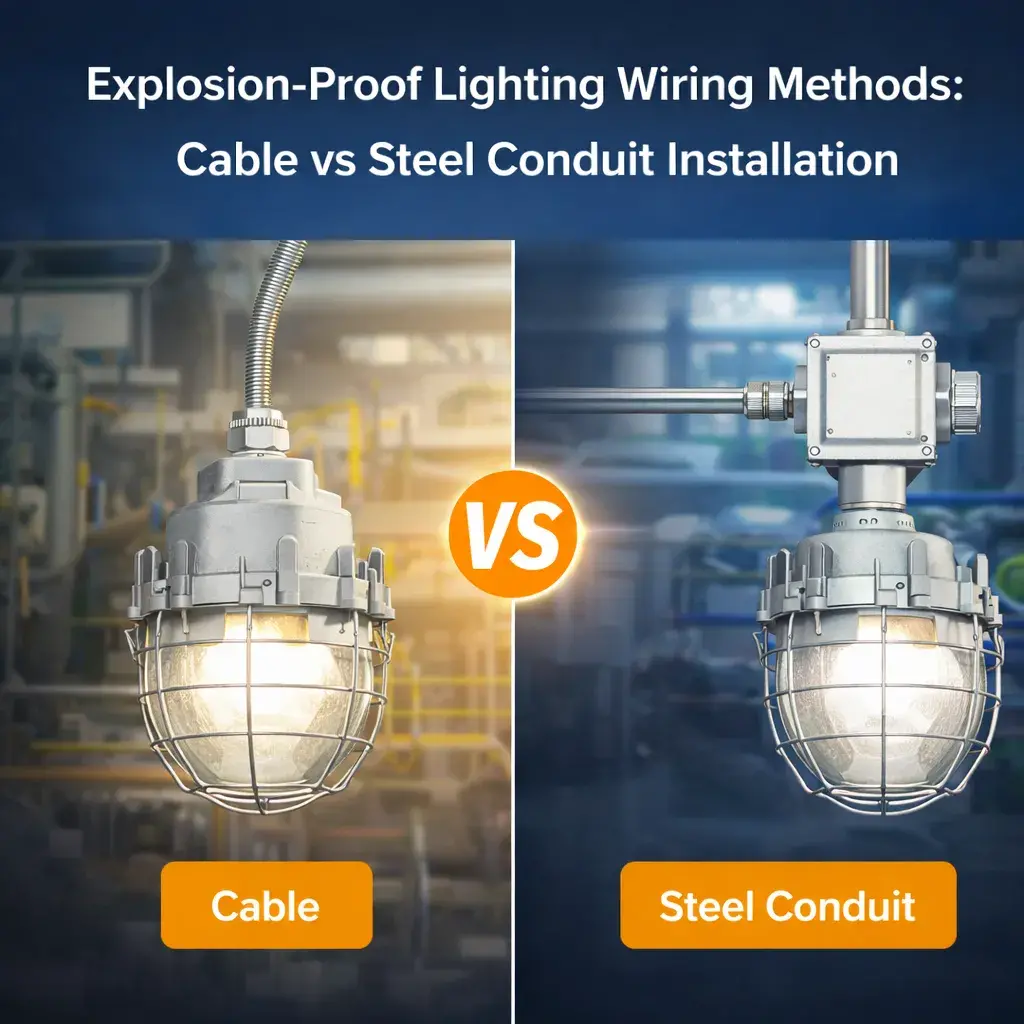
In explosion-proof installations, two common wiring methods are typically used:
-
Cable wiring layout
-
Steel conduit wiring layout
Both methods are designed to safely supply power to explosion-proof lighting fixtures and electrical equipment while preventing ignition risks in hazardous areas.
The following diagrams illustrate the typical installation structures used in industrial applications.
Method 1: Cable Wiring Layout
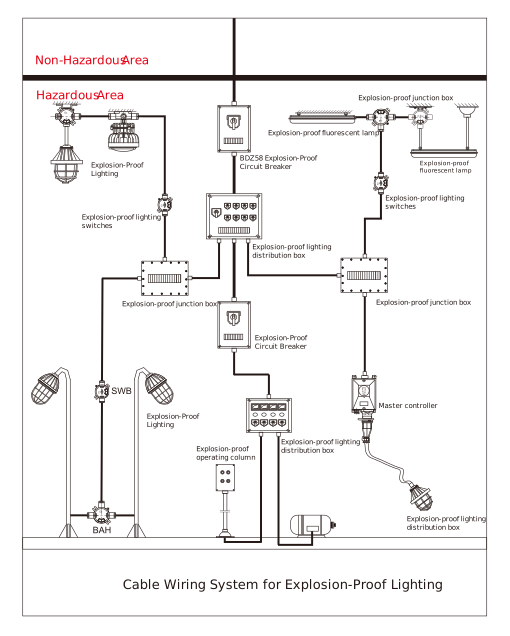
In the cable wiring method, armored or industrial cables are directly connected to explosion-proof equipment through certified cable glands.
Typical components include:
-
Cable glands
Advantages of cable wiring systems:
-
Flexible installation
-
Faster construction time
-
Suitable for medium-sized industrial facilities
-
Lower installation cost compared with conduit systems
Cable wiring layouts are commonly used in:
-
manufacturing workshops
-
industrial plants
Method 2: Steel Conduit Wiring Layout
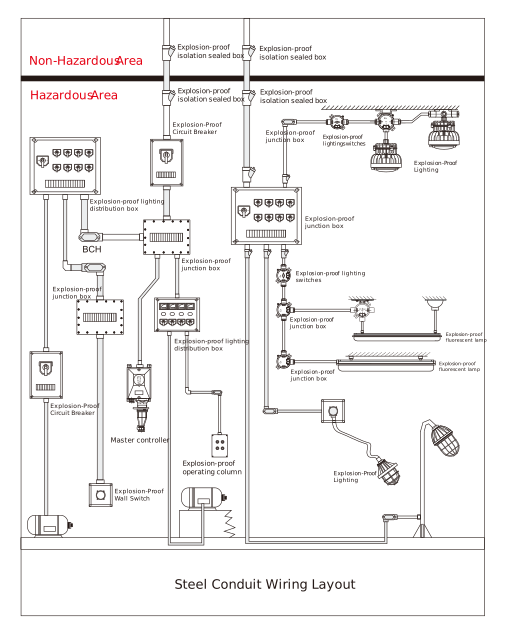
The steel conduit wiring method uses rigid metal conduits to route electrical cables between explosion-proof equipment.
The conduit system protects cables and provides additional mechanical strength in harsh industrial environments.
Typical components include:
-
explosion-proof junction boxes
-
explosion-proof switches
-
steel conduit pipes
Advantages of steel conduit wiring systems:
-
higher mechanical protection
-
better resistance to external damage
-
improved sealing performance in hazardous areas
-
suitable for heavy industrial environments
This wiring method is widely used in:
Cable Wiring vs Steel Conduit Wiring
| Feature | Cable Wiring | Steel Conduit Wiring |
|---|---|---|
| Installation complexity | Easy | More complex |
| Installation cost | Lower | Higher |
| Mechanical protection | Medium | High |
| Typical application | Workshops / warehouses | Oil & gas / petrochemical |
Both wiring methods can meet explosion-proof safety standards when installed with certified equipment and components.
Explosion-Proof Electrical Equipment Used in Lighting Systems
Explosion-proof lighting installations typically require several types of certified equipment, including:
-
Explosion-proof cable glands
These components ensure safe operation in hazardous environments classified as Zone 1, Zone 2, or equivalent hazardous area standards.
Conclusion
Choosing the correct wiring method is critical for ensuring the safety and reliability of explosion-proof lighting systems.
Cable wiring systems provide flexible and cost-effective solutions for many industrial environments, while steel conduit wiring systems offer enhanced protection and durability in more demanding hazardous locations.
Proper design and installation of explosion-proof equipment can significantly improve operational safety and reduce maintenance risks in hazardous industrial facilities.