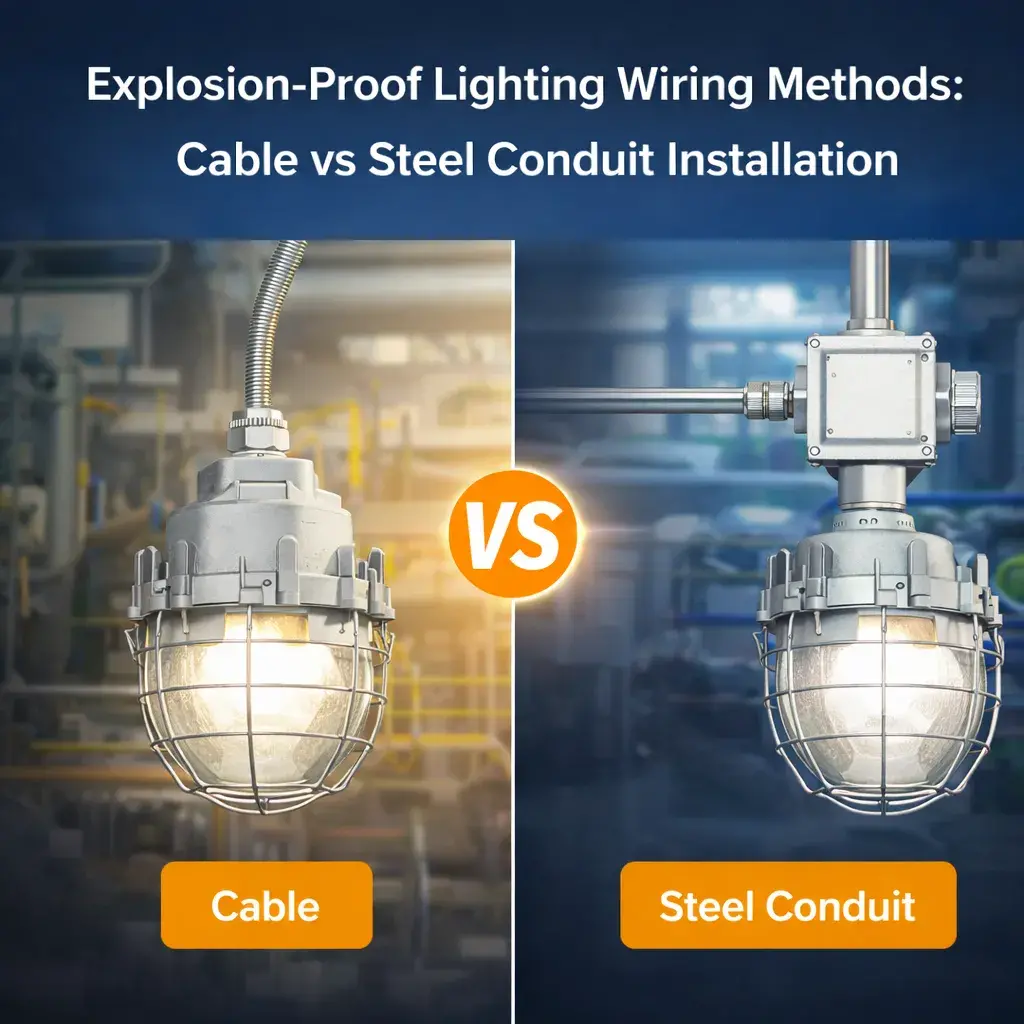
The Ultimate Guide to Selecting Explosion-Proof Lighting for Hazardous Areas

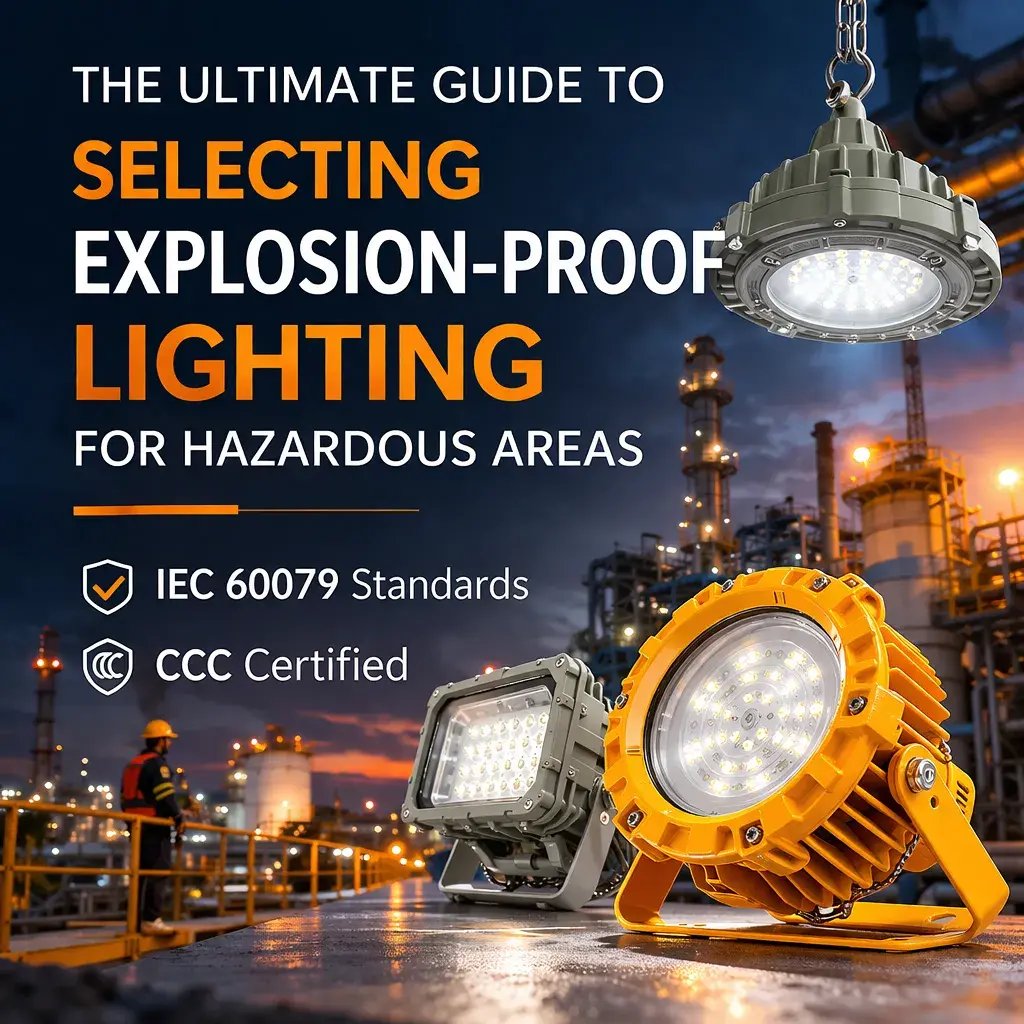
Introduction
Working in hazardous industrial environments such as oil refineries, chemical plants, offshore platforms, and gas processing facilities has taught me one important lesson: lighting is not just about visibility—it is about safety.
In explosive atmospheres, a poorly designed lighting fixture can become an ignition source. Sparks, excessive surface temperatures, or electrical faults may ignite flammable gases or dust. This is why explosion-proof lighting is a critical component of hazardous area electrical systems.
At Ex-ZS, engineers focus on designing lighting equipment that meets the strict safety standards required in explosive environments. Modern hazardous area lighting solutions combine robust mechanical design, advanced LED technology, and compliance with international standards such as IEC 60079-0.
If you are selecting lighting equipment for a hazardous location, this guide will help you understand:
-
What explosion-proof lighting really means
-
Hazardous area classifications (Zone 0 / 1 / 2)
-
The difference between LED and traditional explosion-proof lamps
-
Key international standards including IEC 60079 and CCC certification
-
How to choose the right lighting solution for your facility
What Is Explosion-Proof Lighting?
Explosion-proof lighting refers to luminaires specifically designed to prevent internal sparks, arcs, or high temperatures from igniting surrounding flammable gases or dust.
These fixtures typically feature:
-
Heavy-duty die-cast aluminum housings
-
Flameproof or increased safety electrical structures
-
Tempered glass or polycarbonate lenses
-
High sealing performance (often IP66 or higher)
The enclosure is engineered so that any internal explosion is contained inside the housing, preventing ignition of the surrounding environment.
This design principle is defined in the IEC 60079 series of standards, especially:
-
IEC 60079-0 — General requirements
-
IEC 60079-1 — Flameproof enclosure (Ex d)
-
IEC 60079-7 — Increased safety (Ex e)
These standards form the foundation for most global explosion protection certifications.
Hazardous Area Classifications Explained
Before selecting explosion-proof lighting, engineers must first determine the hazardous area classification.
Hazardous environments are divided into zones based on the likelihood of explosive atmospheres.
| Zone | Description | Typical Locations |
|---|---|---|
| Zone 0 | Explosive gas atmosphere present continuously | Inside tanks |
| Zone 1 | Explosive atmosphere likely during operation | Chemical plants |
| Zone 2 | Explosive atmosphere unlikely, short duration | Storage areas |
Dust environments are classified as:
| Zone | Description |
|---|---|
| Zone 20 | Combustible dust continuously present |
| Zone 21 | Dust likely during normal operation |
| Zone 22 | Dust only occasionally present |
Explosion-proof lighting is typically designed for Zone 1, Zone 2, Zone 21, and Zone 22 environments.
Explosion Protection Standards: IEC, ATEX and CCC
Selecting certified lighting equipment is essential in hazardous environments.
IECEx and IEC Standards
The IEC 60079 series defines international requirements for explosion-protected equipment.
For lighting fixtures, the most relevant standards include:
-
IEC 60079-0 – General requirements
-
IEC 60079-1 – Flameproof enclosure
-
IEC 60079-7 – Increased safety
-
IEC 60079-31 – Dust protection
These standards ensure equipment can safely operate in explosive atmospheres.
ATEX Certification
ATEX certification is required for equipment used in the European Union.
Typical ATEX markings for explosion-proof lighting include:
II 2G Ex db IIC T6 Gb
II 2D Ex tb IIIC T80°C Db
These markings define:
-
Equipment category
-
Explosion protection method
-
Gas group compatibility
-
Maximum surface temperature
Types of Explosion-Proof Lighting
Explosion-Proof LED Floodlights
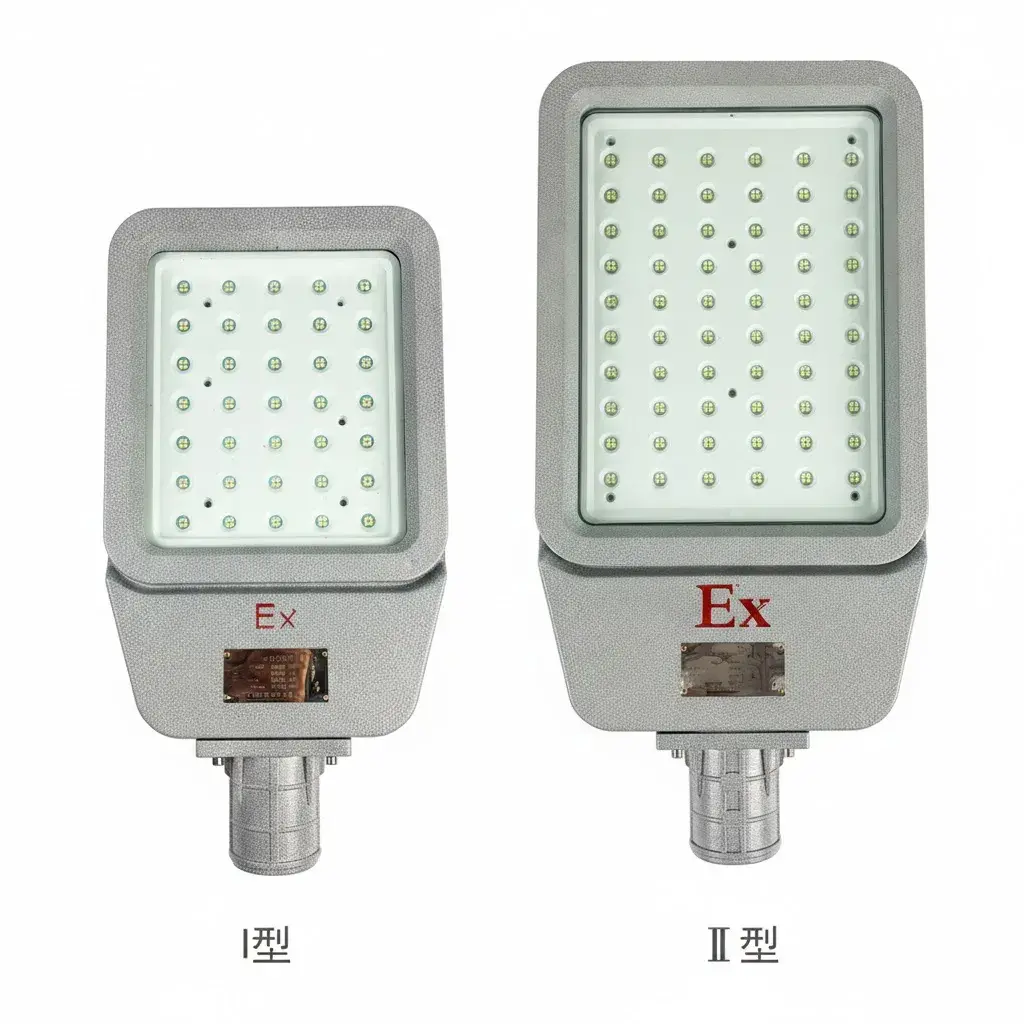
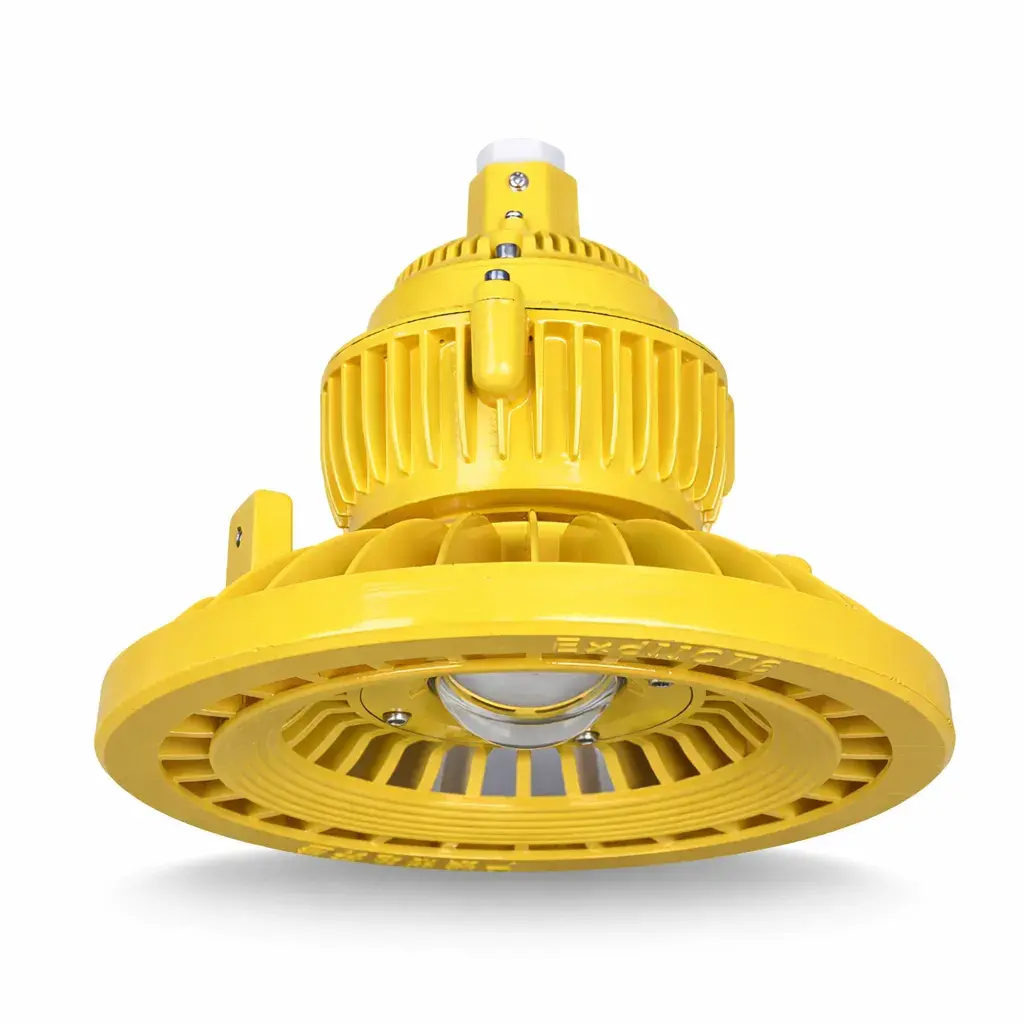
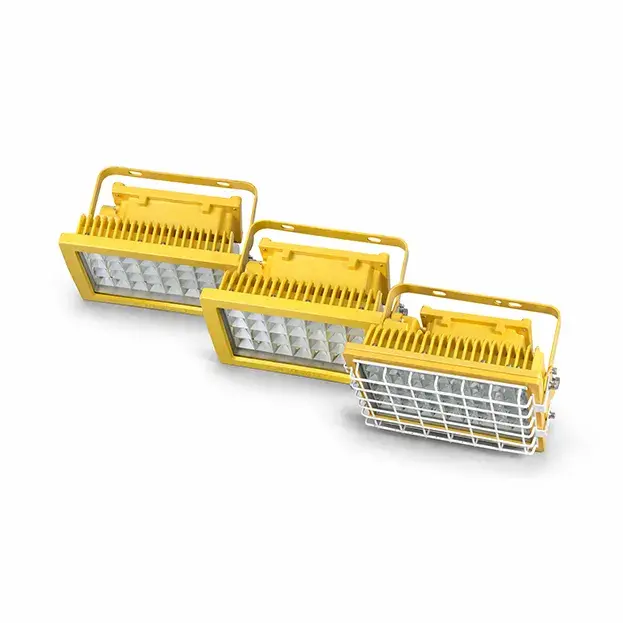
These fixtures are typically used for:
-
Oil depots
-
Offshore platforms
-
Chemical storage areas
-
Pipeline terminals
Modern explosion-proof floodlights use high-efficiency LEDs with lifespans exceeding 100,000 hours, significantly reducing maintenance costs.
Explosion-Proof Linear Lights
Linear explosion-proof lights are commonly installed in:
-
Production workshops
-
Chemical processing areas
-
Gas compressor stations
Typical models include:
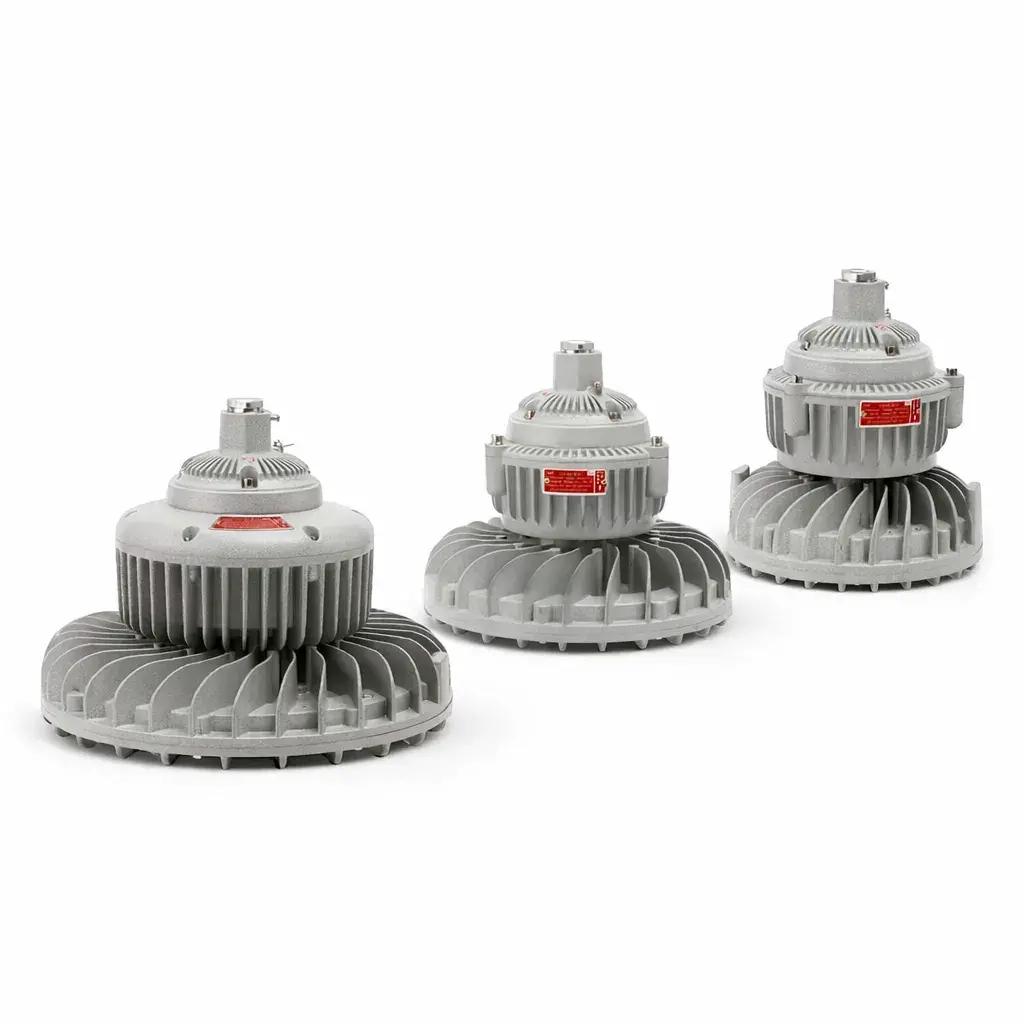
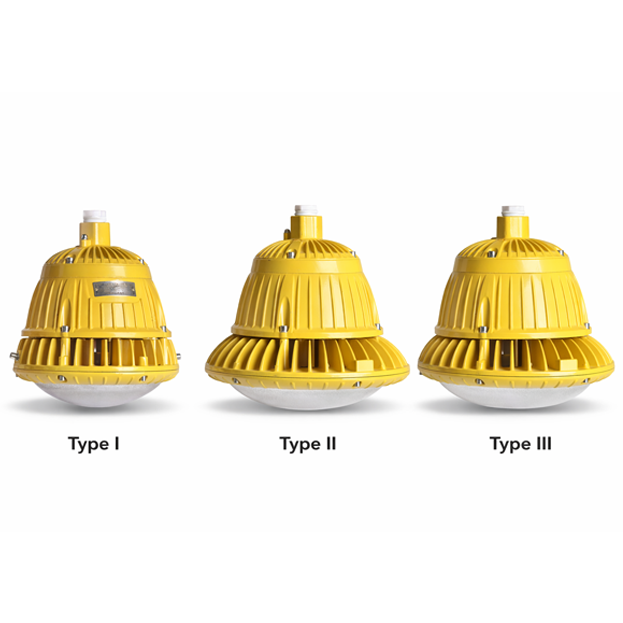
Heavy-Duty Hazardous Area Lights
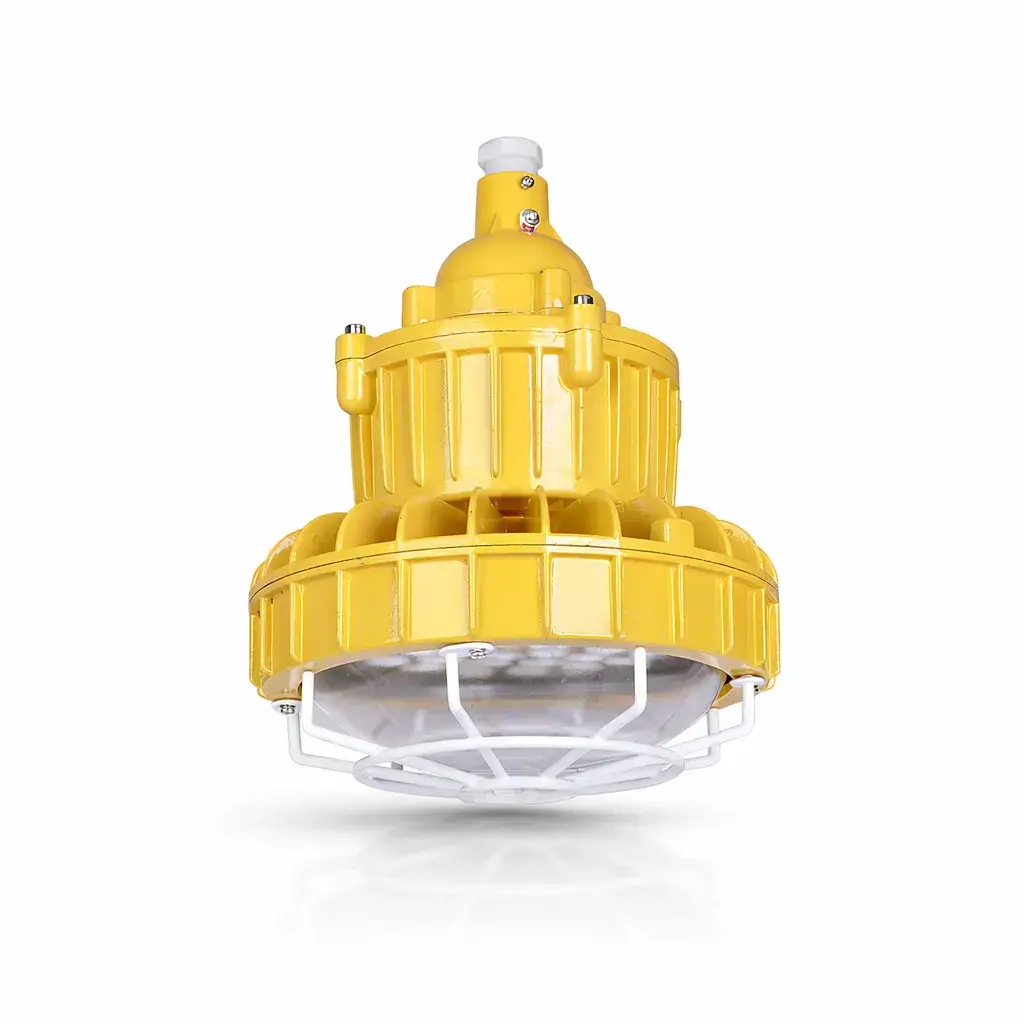
These fixtures are designed for:
-
Offshore drilling platforms
-
Petrochemical refineries
-
Mining facilities
They typically feature reinforced aluminum housings and impact-resistant lenses to withstand vibration and corrosive environments.
LED vs Traditional Explosion-Proof Lighting
Over the past decade, the industry has rapidly transitioned from HID lamps to LED technology.
| Feature | LED Lighting | HID Lighting |
|---|---|---|
| Energy efficiency | High | Medium |
| Lifespan | 50,000–100,000 hours | 8,000–15,000 hours |
| Maintenance | Low | High |
| Start-up time | Instant | Slow |
Because of these advantages, LED explosion-proof lighting has become the industry standard.
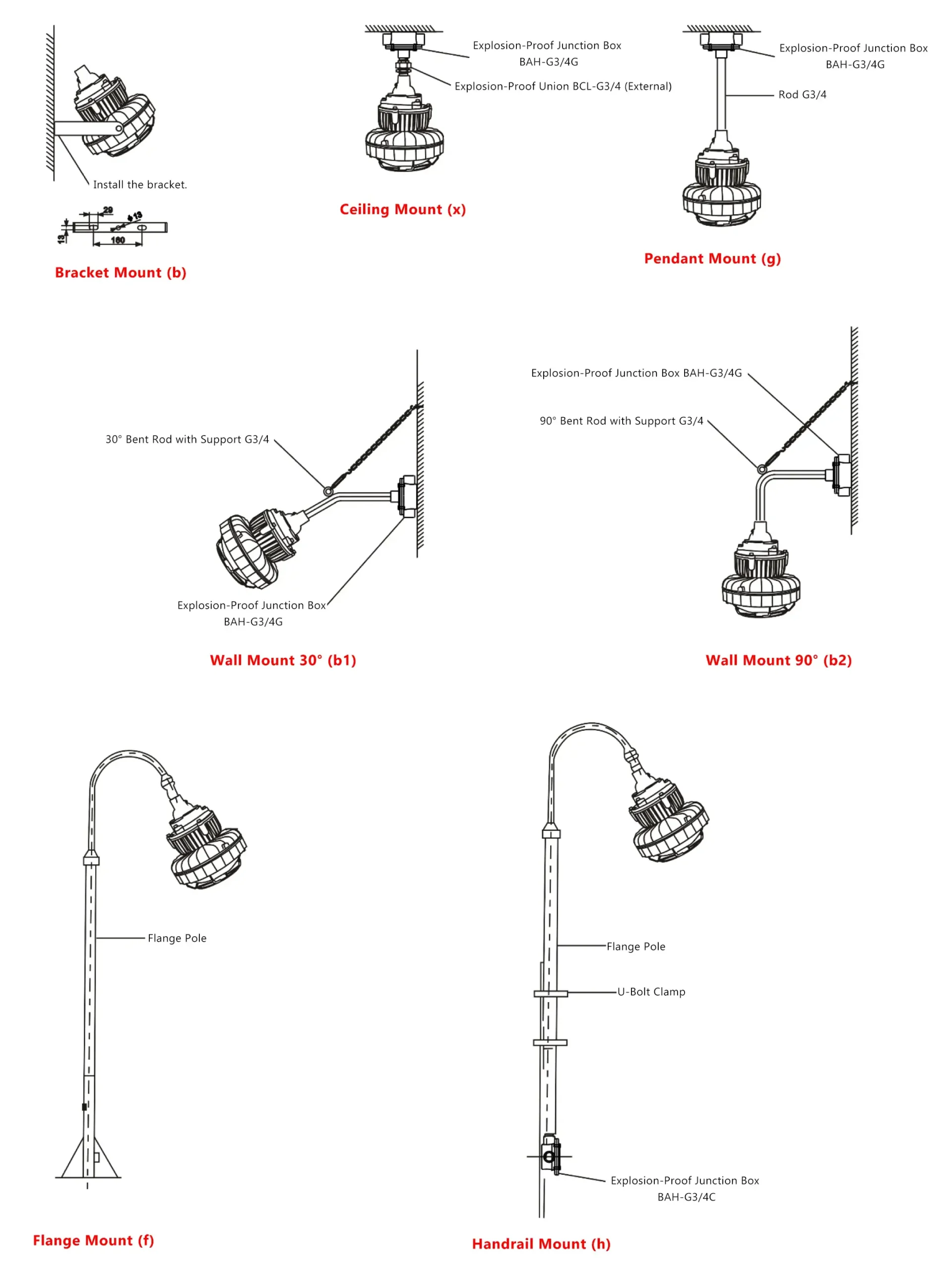
Explosion-Proof Lighting Installation Methods
Different industrial environments require different mounting options.
Common installation methods include:
-
Wall mounted lighting
-
Ceiling mounted lighting
-
Pole mounted floodlights
-
Pendant mounted luminaires
Explosion-proof floodlights often include adjustable mounting brackets for flexible installation angles.
Key Factors When Selecting Explosion-Proof Lighting
Based on my experience in hazardous area electrical design, the following factors are critical.
1 Hazardous Area Zone
Determine whether the installation location is:
-
Zone 1
-
Zone 2
-
Zone 21
-
Zone 22
2 Explosion Protection Type
Common protection methods include:
-
Ex d (Flameproof)
-
Ex e (Increased Safety)
-
Ex nR (Restricted breathing)
3 Temperature Class
Equipment temperature must remain below the ignition temperature of the hazardous gas.
Common classes include:
| Temperature Class | Max Surface Temperature |
|---|---|
| T6 | 85°C |
| T5 | 100°C |
| T4 | 135°C |